- Home
- Blog
- Railing Replacement for Apartment Buildings, Condos and HOAs in New Jersey: A Property Manager’s Guide
Railing Replacement for Apartment Buildings, Condos and HOAs in New Jersey: A Property Manager’s Guide
Learn why aluminum railings outperform iron in NJ homes. Ensure safety, save on costs, and comply with codes.
AK Welding LLC | Commercial & Multifamily Aluminum Railings | North Jersey
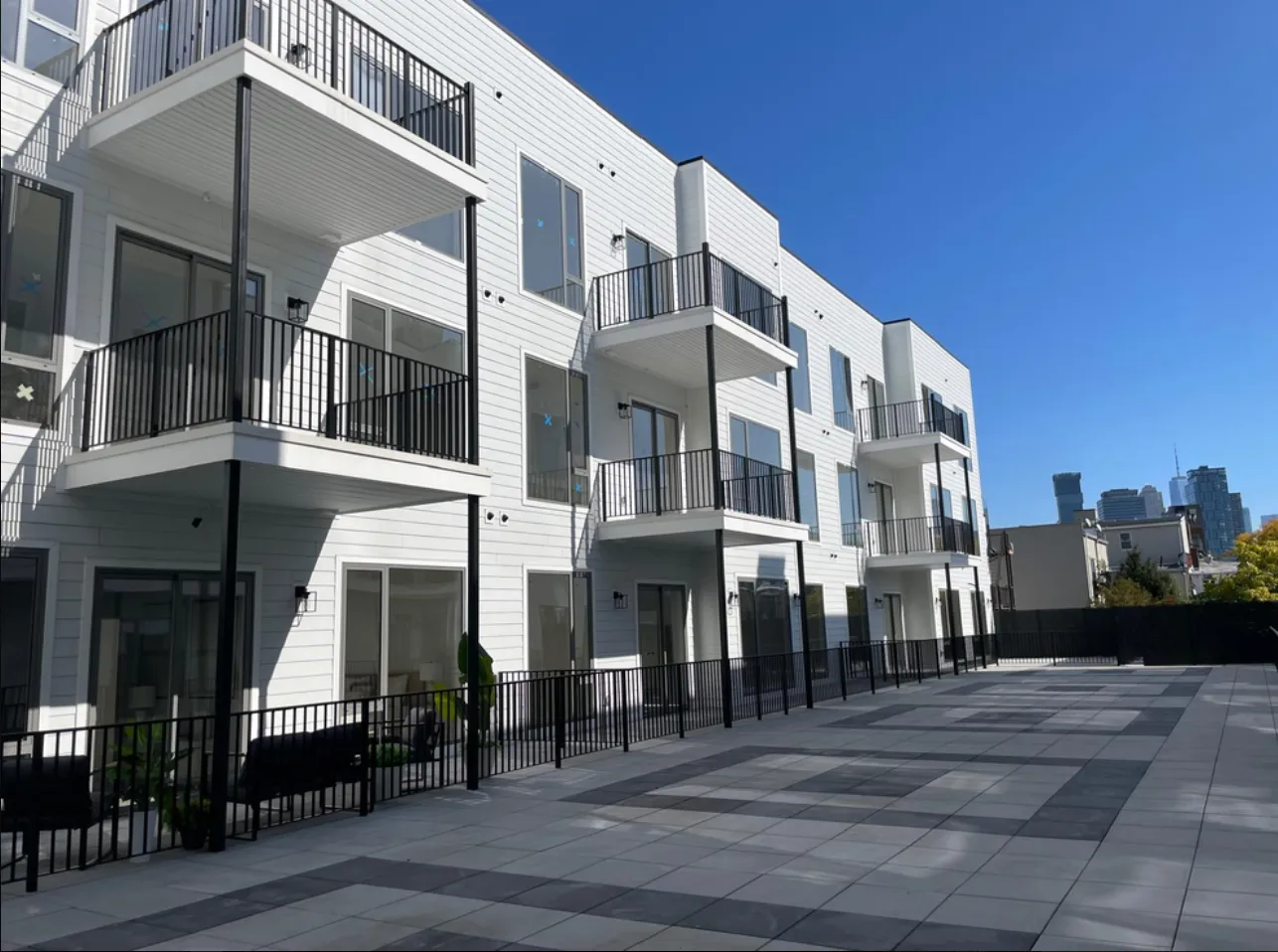
Quick answer: Railings on multifamily buildings wear out faster than most owners expect, and a loose or rusted one is both an inspection violation and a liability. If your building has iron railings rusting at the base, wobbling at the posts, or missing pickets, replacing them with powder-coated aluminum usually costs less over time than repairing and repainting. The work can be phased building by building so residents are never left without safe access.
Why railings matter more on multifamily buildings
A railing on a single-family home gets used by one household. A railing at an apartment entrance gets used hundreds of times a day by residents, visitors, delivery drivers and movers carrying furniture. That traffic, plus years of snow and de-icing salt, is why railings at garden apartments and condo complexes fail sooner.
When one fails, the owner or association carries the risk. A fall on common-area stairs with a loose handrail is one of the most common premises claims a property faces, and a written inspection violation that was never fixed makes it worse.
What inspectors look for
New Jersey registers and inspects multiple dwellings (buildings with three or more units) through the state Bureau of Housing Inspection, generally on a five-year cycle. Buildings that don’t clear their violations can be inspected more often. Condo and co-op associations also have structural inspection and reserve study duties under the state’s 2024 structural integrity law.
On railings, inspectors and engineers typically flag:
Loose or wobbly railings at entrance steps, landings and balconies
Rust-through at the base of posts, especially where iron meets concrete
Missing or broken pickets that leave gaps a child could fit through
Stairs with no handrail, or a handrail on only one side
Railings that are too low for the code that applies today
Commercial railing code basics
Common areas of multifamily buildings fall under the commercial building code, which is stricter than the code for single-family homes:
Guardrails: at least 42 inches high on open edges with a drop of more than 30 inches
Handrails on stairs: 34 to 38 inches above the step nosing, on both sides
Openings: a 4-inch sphere should not pass through
Strength: the top rail has to resist a 200-pound load at any point
Older railings were often built to older rules. Your building department or engineer can tell you what applies to a replacement on your building.
Repair or replace?
Repair makes sense when the metal is sound and the problem is isolated, like one loose post or a single damaged section.
Replacement makes sense when:
Posts are rusted through where they enter the concrete
The same railings need scraping and repainting every few years
Rust is cracking the steps or landings around the posts
Violations keep coming back at different buildings in the complex
The railings no longer meet height or spacing requirements
For a complex with dozens of entrances, repainting iron every few years is a recurring budget line. Powder-coated aluminum removes it.
Why property managers choose aluminum
It doesn’t rust. Salt and snow are the main reason iron railings fail in New Jersey.
No painting. The powder-coat finish is baked on at the shop.
Consistent look. Every entrance matches, which matters for curb appeal and unit values.
Lighter loads on old concrete. Aluminum puts less stress on aging steps and landings.
How a multi-building railing project works
Site walk and measure. We walk the property with you, count and measure every location, and note any concrete problems.
Written proposal. You get one clear price with the scope and specifications spelled out, ready for your board or ownership.
Shop fabrication. Every railing is built to fit in our Ridgefield Park shop.
Phased installation. We work building by building so each entrance is open and safe at the end of the day. Posts are core-drilled into the concrete and set in anchoring cement.
Closeout. We walk the finished work with you and provide documentation for your records and for clearing any open violations.
Why AK Welding
AK Welding LLC has fabricated and installed custom aluminum railings across North Jersey since 2007. We’re family-owned, veteran-owned, licensed (NJ HIC #13VH08404200) and insured. We build in our own shop and install with our own crew, so the people who made your railings are the ones putting them in.
Managing a property with railings that need attention? Call or text 201-620-1858 or request a quote at jimmywelding.com. Send photos and the number of entrances, and we’ll schedule a site walk.
Frequently Asked Questions
Who is responsible for railings at a condo or HOA?
Railings on common-area stairs, entrances and walkways are usually the association’s responsibility. Balcony railings depend on your governing documents, so check with your association attorney.
How long do aluminum railings last?
Decades. Aluminum doesn’t rust, and the powder-coat finish holds up to weather without repainting.
Can you match the railings we already have?
In most cases, yes. Because we fabricate in-house, we can match the style, height and color of existing railings or bring the whole property to one updated look.
Can the work be done while residents are living there?
Yes. We phase the work so residents always have safe access to their building.
Do you work with general contractors and engineers?
Yes. We regularly work from plans and specifications on commercial and multifamily projects.
What areas do you serve?
Bergen, Passaic, Hudson and Essex counties.