Aluminum Fencing, Railings & Gates: What Homeowners Need to Know Before They Buy
Explore why aluminum is a top choice for fences and railings. Learn key considerations to ensure a lasting installation. Get expert advice from AK Welding LLC.
Published by AK Welding LLC
If you're shopping for a new fence, railing, or gate and aluminum keeps coming up, there's a good reason for that. Aluminum has become one of the most popular choices for both residential and commercial properties — and once you understand why, it's hard to argue with.
But not all aluminum work is the same. The difference between a poorly installed aluminum fence and one that's properly fabricated and set is night and day. At AK Welding LLC, we specialize in aluminum railings, fences, and gates, and we want to help you make a smart decision before you spend a dime.
Why Aluminum? Here's What Makes It Stand Out
It Doesn't Rust — Ever
This is the big one. Unlike steel or wrought iron, aluminum doesn't rust. It naturally forms a protective oxide layer that keeps moisture from eating through it. For anything outdoors — a deck railing, a pool fence, a driveway gate — that matters enormously over the long run.
Low Maintenance, Long Life
Once it's installed, aluminum basically takes care of itself. No painting every few years, no sanding, no rust treatment. An occasional rinse with a garden hose is usually all it takes. For homeowners who want something that looks good without constant upkeep, aluminum is tough to beat.
Strong Enough for the Job
There's a common misconception that aluminum is flimsy. Modern aluminum fencing and railings are engineered to handle real-world conditions — wind loads, impact, daily use on gates and latches. When fabricated correctly, it's a genuinely durable material.
Clean Look That Works Everywhere
Aluminum has a natural, clean aesthetic that works with traditional homes, modern architecture, and everything in between. It can be powder-coated in virtually any color — classic black, bronze, white, custom colors — so it matches your property rather than clashing with it.
Aluminum Railings: Decks, Stairs, and Balconies
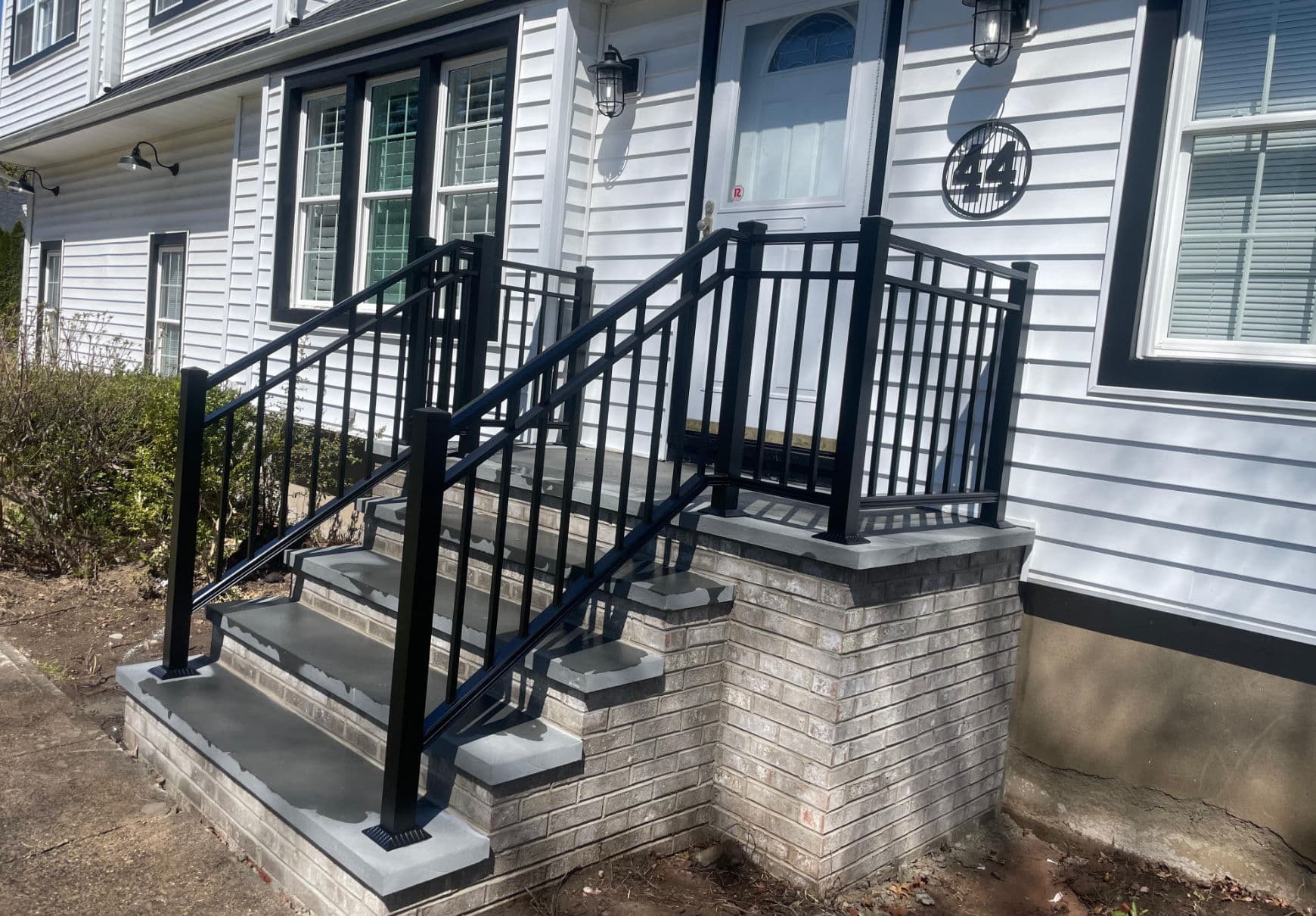
Deck and stair railings are one of the most common things we fabricate and install. If you're replacing old wood railings or putting up something new, aluminum is worth serious consideration.
What to think about:
Building codes matter. Railings have minimum height requirements and baluster spacing rules that vary by location. A professional installer will know these — a handyman might not.
Post setting is everything. A railing is only as strong as how its posts are anchored. Surface-mounted posts, side-mounted posts, and core-mounted posts all have different applications. Done wrong, the whole thing wobbles.
Horizontal vs. vertical balusters. Horizontal balusters look modern and sleek but may not meet code in some areas (they can act as a ladder for kids). Know what you're getting into before you fall in love with a style.
Aluminum Fencing: Yards, Pools, and Property Lines
Aluminum fencing is a popular alternative to wrought iron — it gives you the same classic look at a lower cost and with far less maintenance.
What to think about:
Panel grades matter. Residential, commercial, and industrial grades exist for a reason. If you're fencing a pool or a high-traffic area, don't cut corners on grade.
Pool fencing has specific requirements. Most areas have strict rules about fence height, gate self-closing mechanisms, and latch placement for pool enclosures. Make sure whoever installs yours knows local code.
Ground conditions affect installation. Rocky soil, slopes, and uneven terrain all affect how posts are set and whether your fence line will look straight. An experienced installer accounts for this upfront.
Aluminum Gates: Driveway, Entry, and Walk-Through
A gate is often the first thing people notice about a property. It also gets the most use of anything on your fence line — opened and closed hundreds or thousands of times over its life. That means the hardware, the hinges, and the installation quality matter even more than with a fence panel.
What to think about:
Swing vs. slide. Swing gates need clearance on the opening side. Slide gates need a clear run along the fence line. Your property layout determines which makes sense.
Hardware quality. Hinges, latches, and lock mechanisms need to be rated for the weight of the gate. Undersized hardware leads to sagging and alignment problems fast.
Automation. If you're thinking about adding an automatic opener now or later, mention that before installation. Running conduit and preparing the post for a motor is much easier during the initial install than after.
Questions to Ask Before Hiring Anyone
Whether you're calling AK Welding LLC or anyone else, here's what to ask:
Are you licensed and insured? Non-negotiable.
Do you pull permits when required? Some fence and railing projects require permits. If your contractor skips this, it becomes your problem.
What grade of aluminum are you using? Thicker wall tubing costs more but lasts significantly longer.
What does post-setting look like? Concrete footings, depth, diameter — these details matter.
Do you handle the whole job or subcontract? You want to know who's actually showing up.
The Bottom Line
Aluminum railings, fences, and gates are one of the best investments you can make for your property — low maintenance, great looking, and built to last decades when done right. The key is finding someone who knows aluminum fabrication and installation, not just someone with a drill and a tape measure.
AK Welding LLC specializes in custom aluminum railings, fences, and gates. We fabricate and install everything ourselves — no subcontractors, no shortcuts.
Contact us today for a free estimate on your project.
AK Welding LLC | Aluminum Railings, Fencing & Gates | Professional Fabrication & Installation